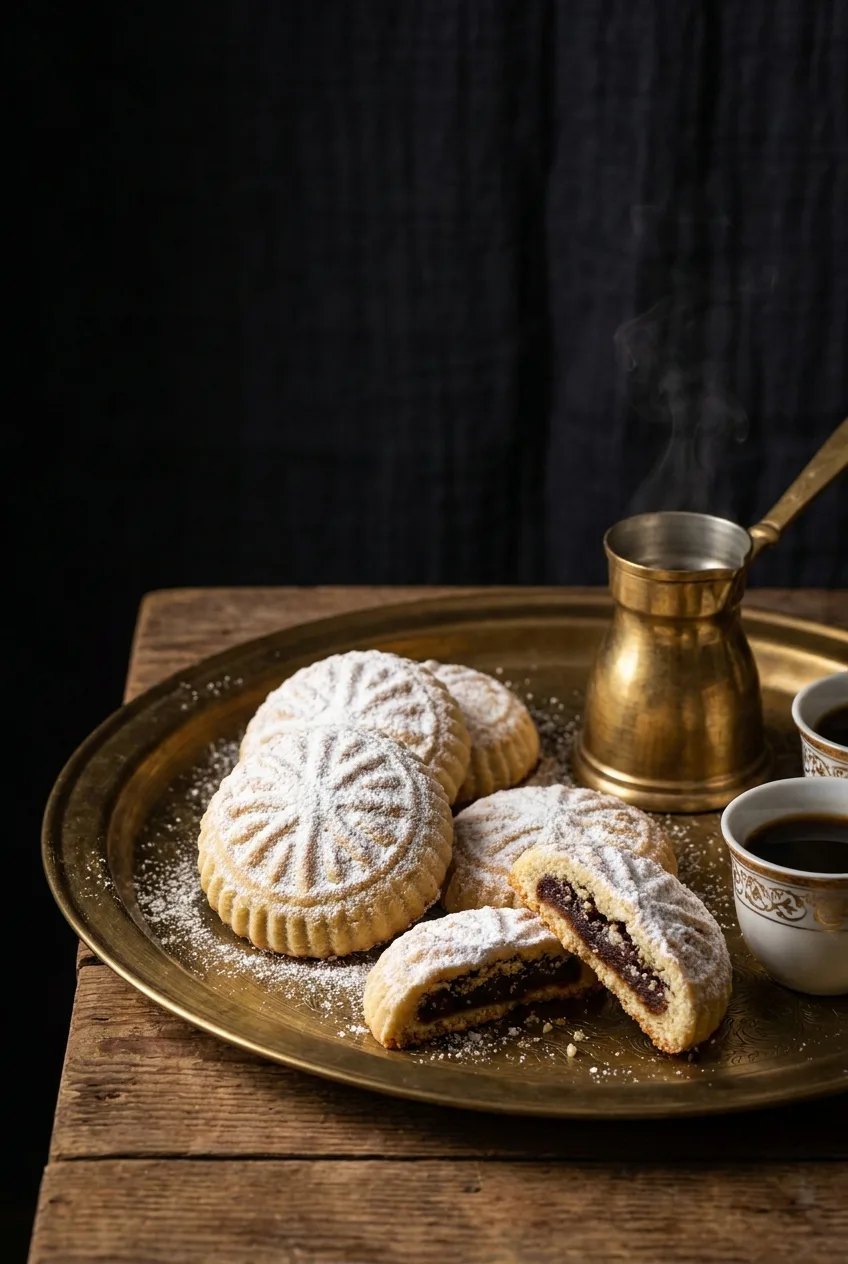
The night of the molds
In the last nights of Ramadan, families bring their wooden molds out of the cupboards: round for dates, oblong for pistachio, conical for walnut. Each pattern is a family signature; some molds are inherited from grandmothers, carved from olive or walnut wood in the souqs of Madinah or the Levant.
Date paste at the heart
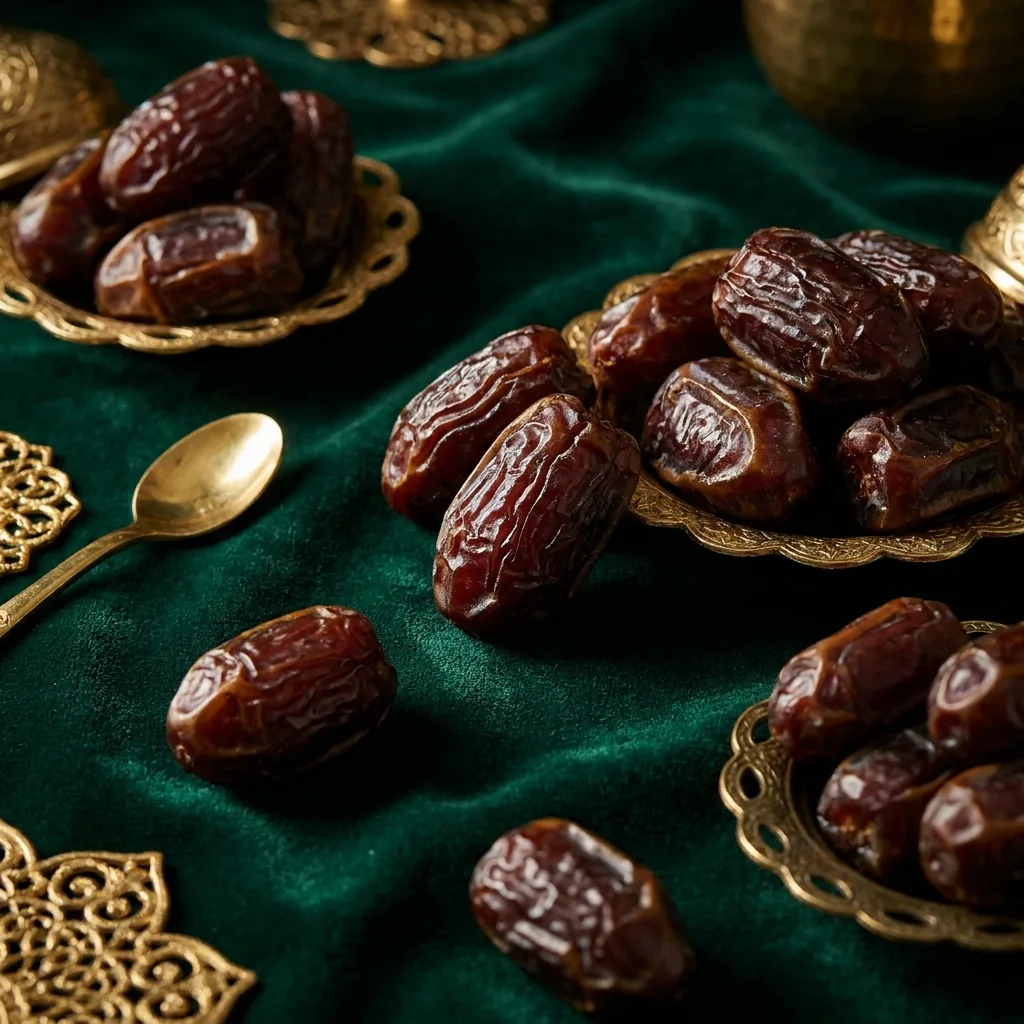
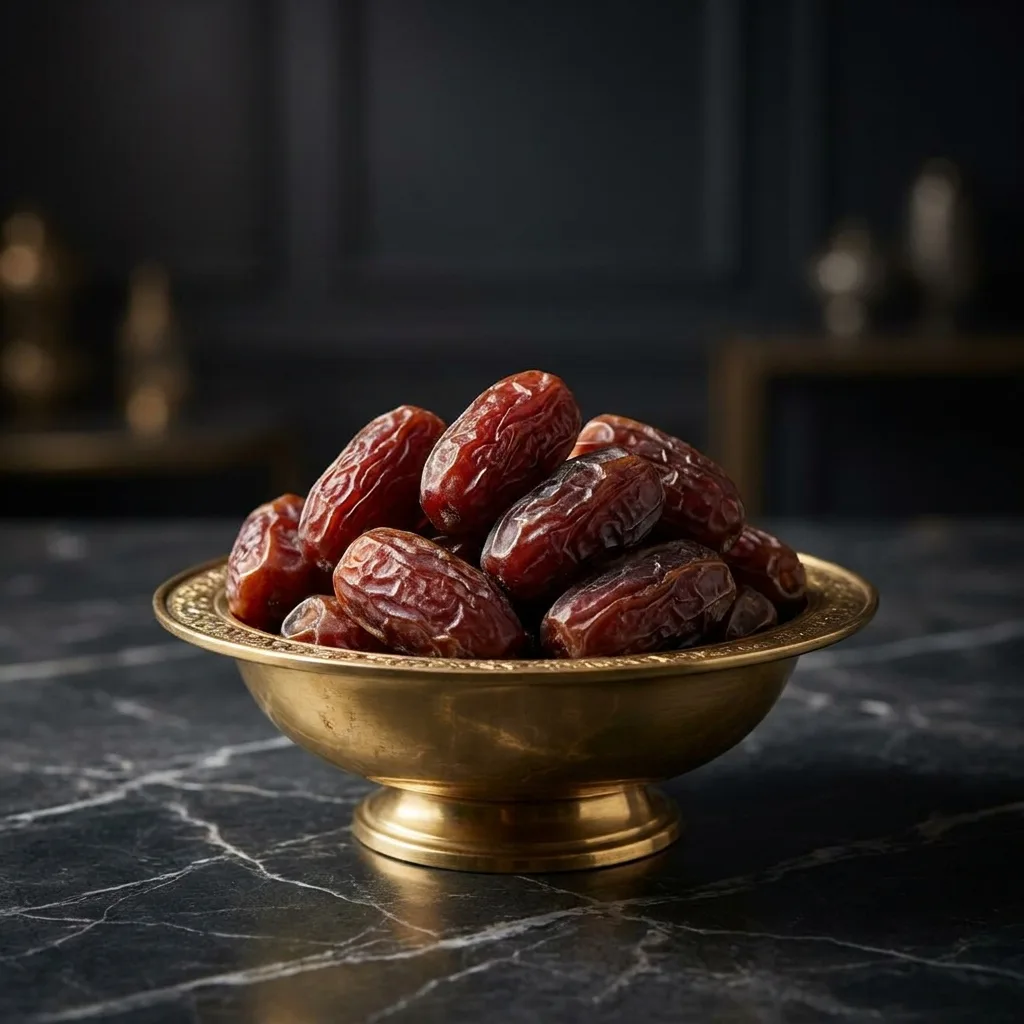
In Saudi Arabia the classic filling is date paste: Khudri or Safawi dates cooked with ghee into a glossy paste, perfumed with cardamom, clove and a hint of nutmeg. The filling is balled, wrapped in semolina dough rested overnight, pressed into the mold and tapped out.
Geometry and memory
The geometric patterns on ma'amoul are not mere decoration; they are a practical code that distinguishes fillings without opening them, and a visual heritage linking the sweet to Islamic art and architectural ornament. Scholars trace the form to ancient festival cakes of Mesopotamia and the Levant, adopted early by the Hijaz.
Eid morning
After the Eid prayer the trays are opened: sugar-dusted ma'amoul, Saudi coffee and Ajwa dates on the table. Neighbours exchange plates of ma'amoul as they exchange greetings, and cities become an open exhibition of shapes and patterns — from Jeddah to Buraydah, Al-Ahsa to Abha.