A stage, not a cultivar
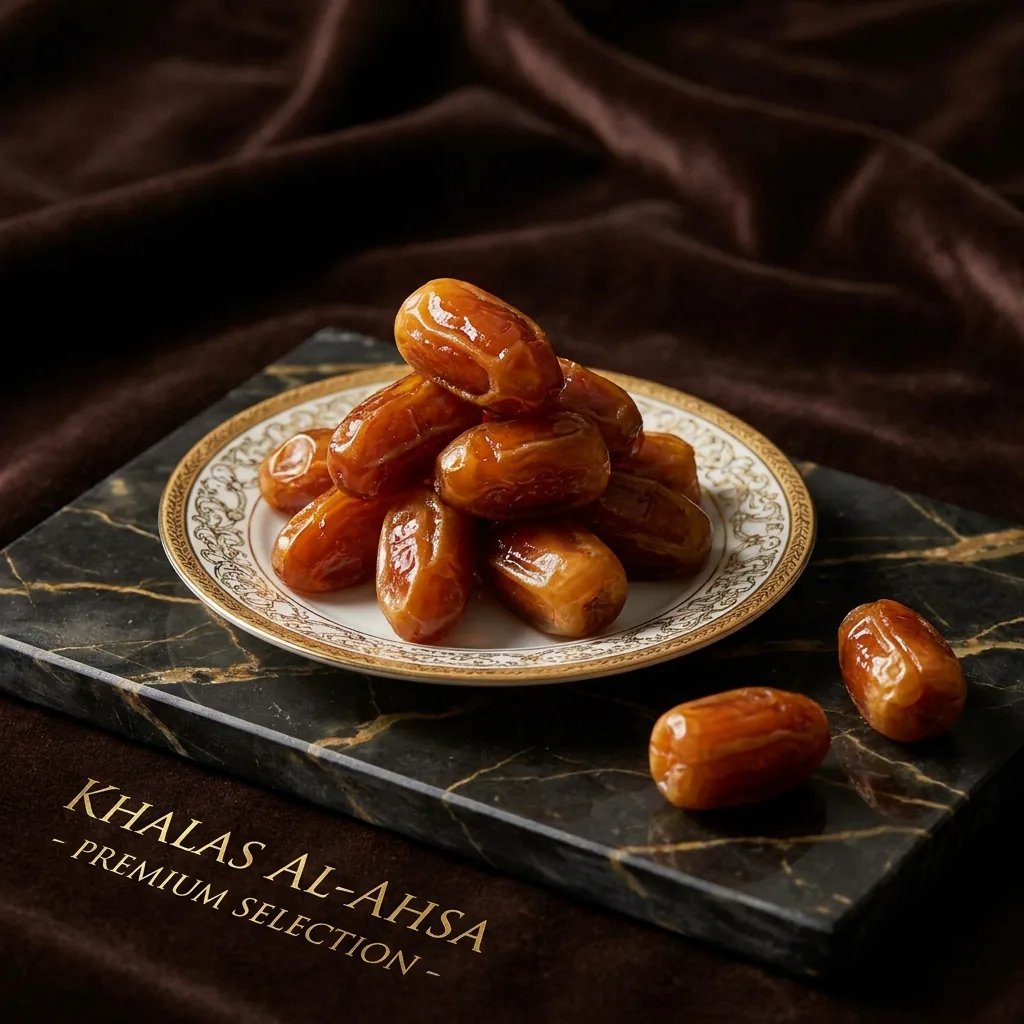
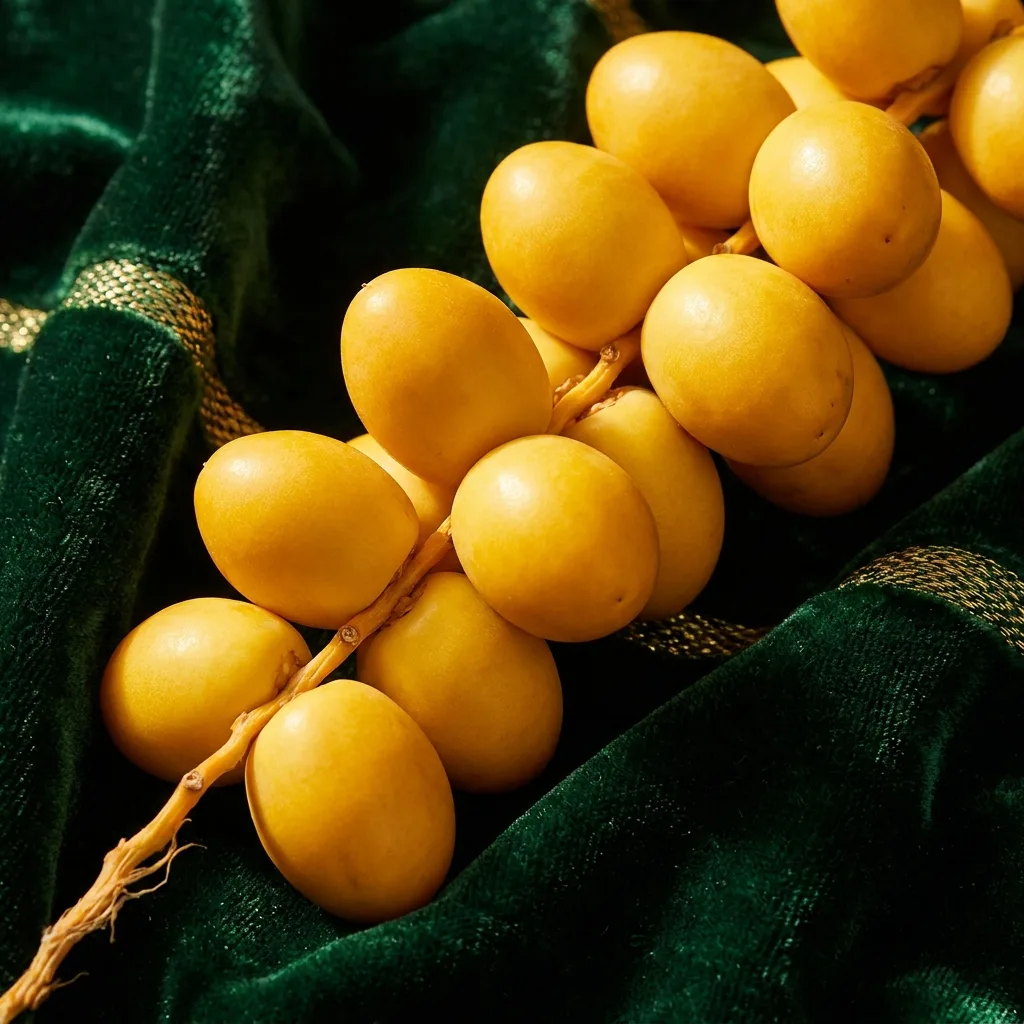
A visitor at the date market asks: “Which cultivar is this rutab?” The answer is that rutab is not a cultivar but a stage. Every date passes through one journey: hababouk, then green kimri, then the yellow or red crunchy khalal (bisr), then soft juicy rutab, and finally dry tamr that keeps for months. Khalas is sold as khalal in June, as rutab in July and as tamr in September — the very same cultivar.
What sets rutab apart is moisture: roughly 35–45% of the fruit's weight, which is why it glistens, yields to the touch and must be eaten within days or chilled. That is why rutab became the emblem of the season itself; when people in Al-Ahsa say “the rutab has arrived,” they mean summer has peaked.
The calendar of the oases
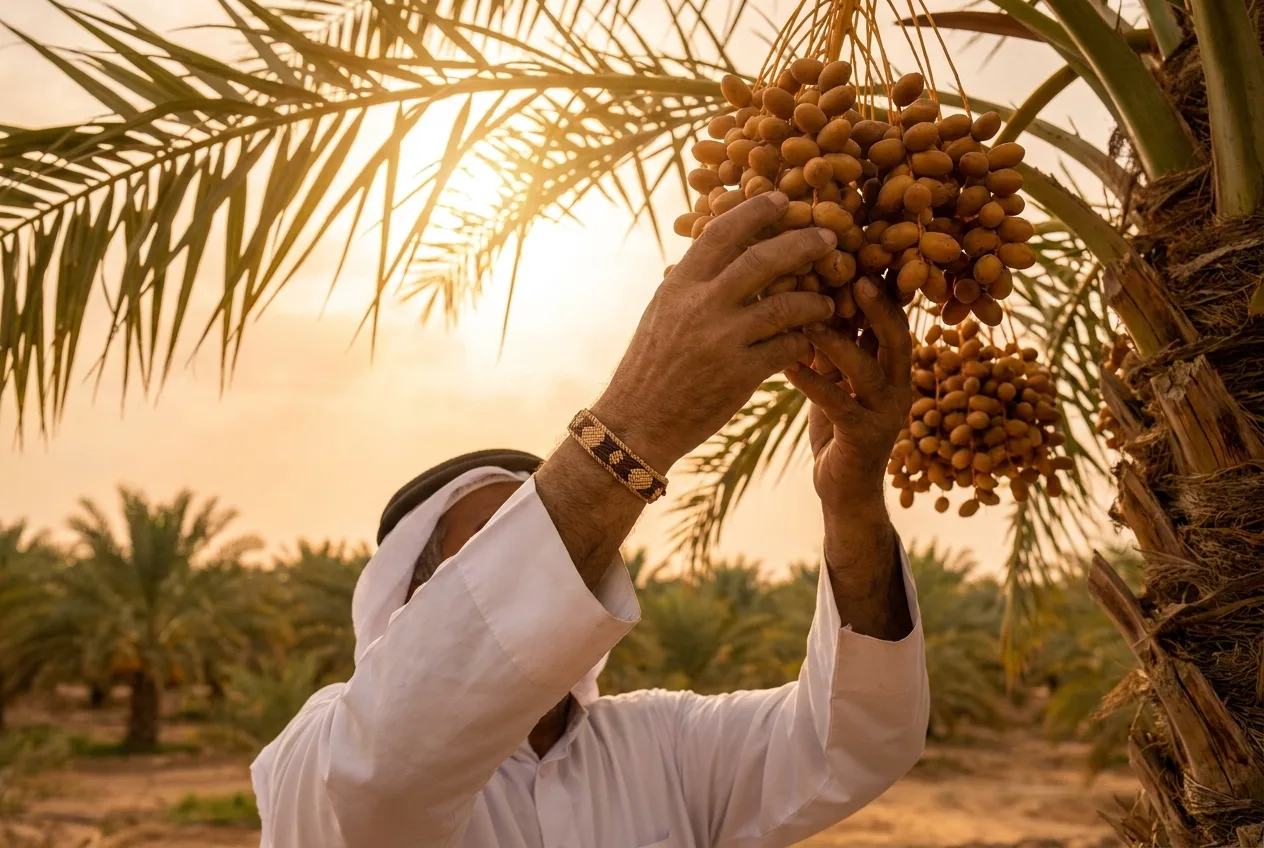
The story begins in February and March with pollination — earlier in hot Najran, from the first days of February. Green fruit swells through spring and turns yellow or red in early summer. The Kingdom's first rutab appears in the hot eastern oases: in Al-Ahsa, Aghar is picked between 1 and 10 June, Shishi follows in late June, and Khalas arrives between 10 and 20 July.
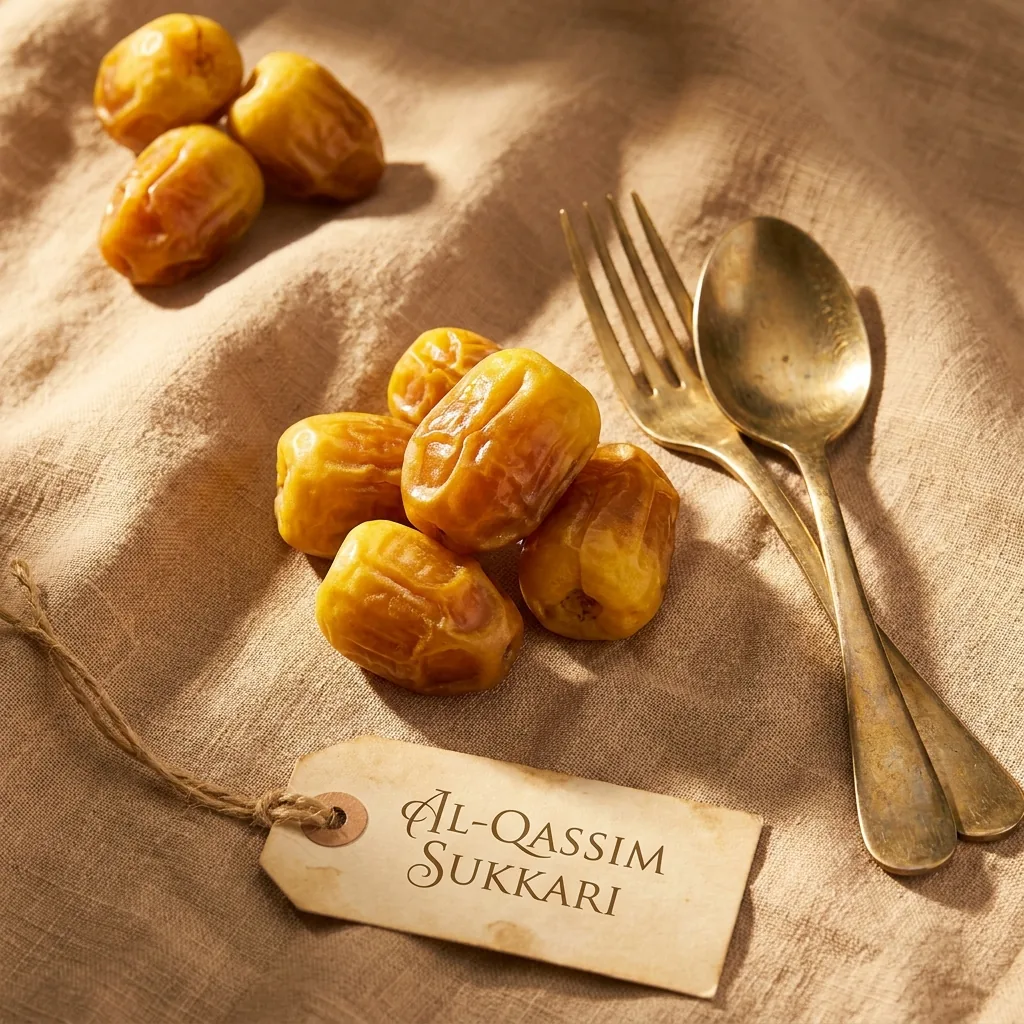
Al-Qassim starts a little later: rare cultivars around 1 July and Sukkari — the king of Buraidah — around 20 July, so the markets reach peak abundance in August. Tabuk ripens last thanks to its milder heat, with harvest concentrated from August to the end of October, while Najran harvests from early July to late September.
Dawn markets
Because rutab does not wait, early markets grow up around it: in Buraidah it is laid out in rows of crates at the Dates City before sunrise, and in Al-Ahsa it is sold by the kilo along the roads to the farms. Experts check the sheen, the give and the skin colour: Sukkari as rutab looks translucent gold, Khalas amber, while many prefer Barhi as crunchy khalal before it softens.
From offshoot to rutab
There is no planting month per cultivar; the MEWA agricultural calendar sets two offshoot-planting windows: spring from mid-February to the end of April, and autumn from mid-August to the end of September, sometimes into October. Many growers favour autumn for its gentler heat. A new palm bears after 3–5 years and peaks between 10 and 15 — so today's rutab was planted a decade or more ago.
Explore the cultivar directory to see the rutab and tamr window of each of the 76 cultivars.