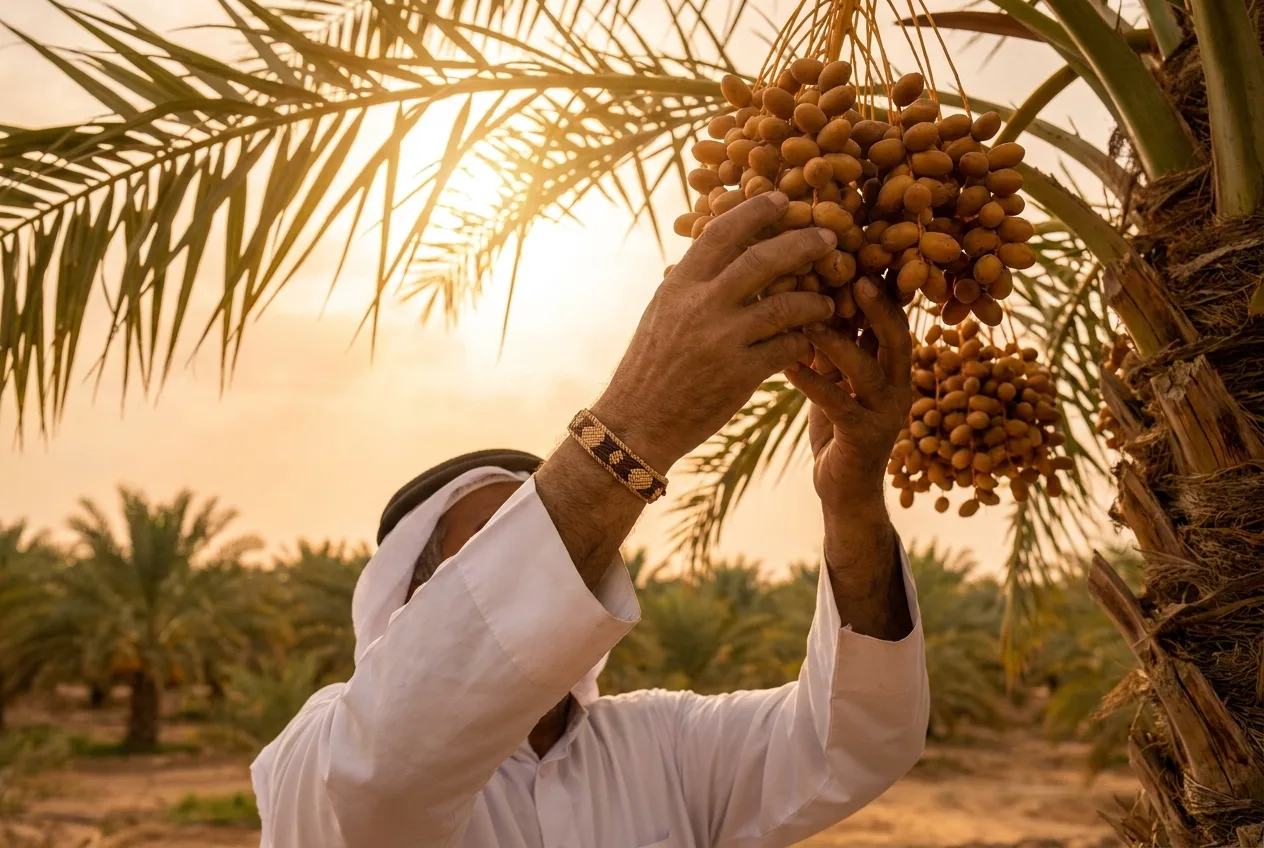
The season begins in spring
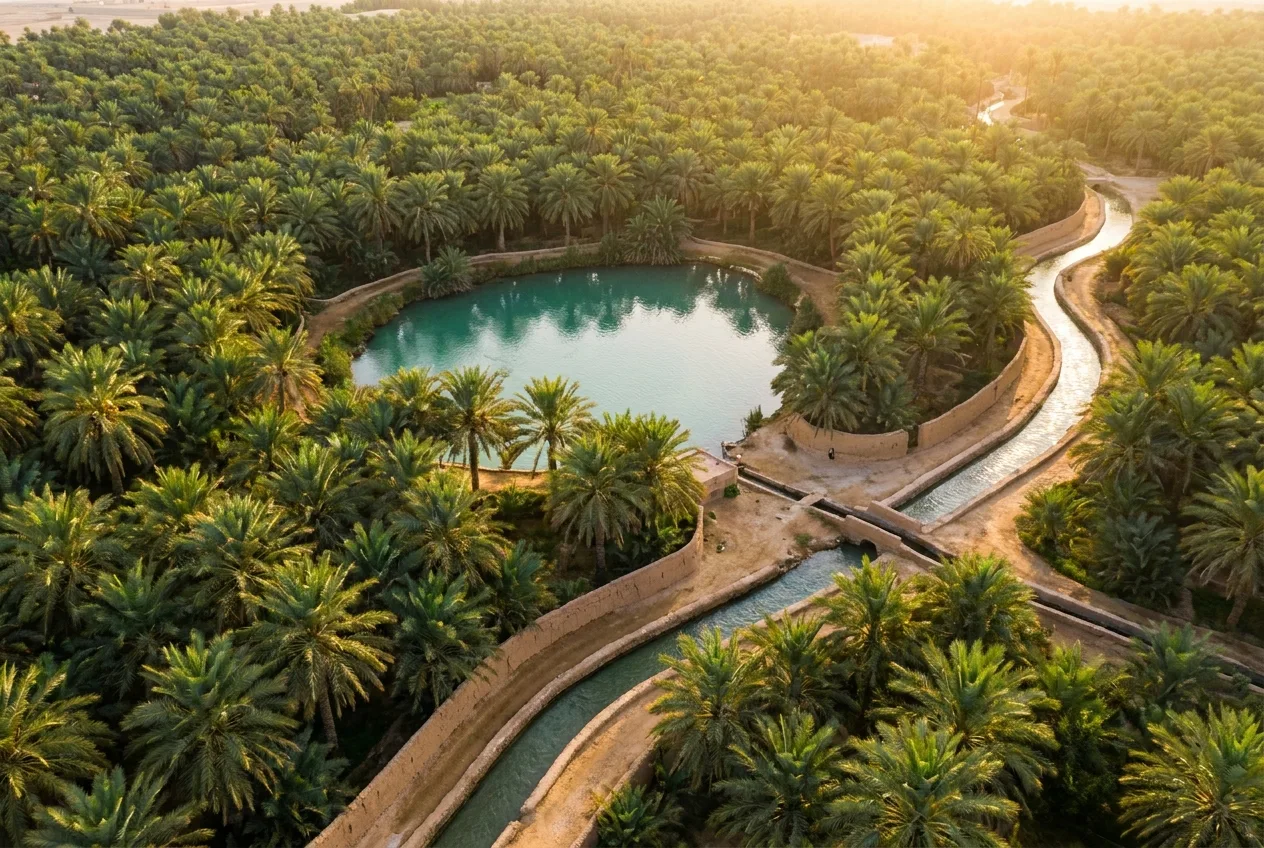
The palm's year begins in February and March with pollination: farmers climb, or use blowers, to carry pollen from male palms to the female strands. In May the fruit is thinned, the strands are propped and netted against birds. Every decision now decides the size and sweetness of the fruit months later.
Four stages of ripening
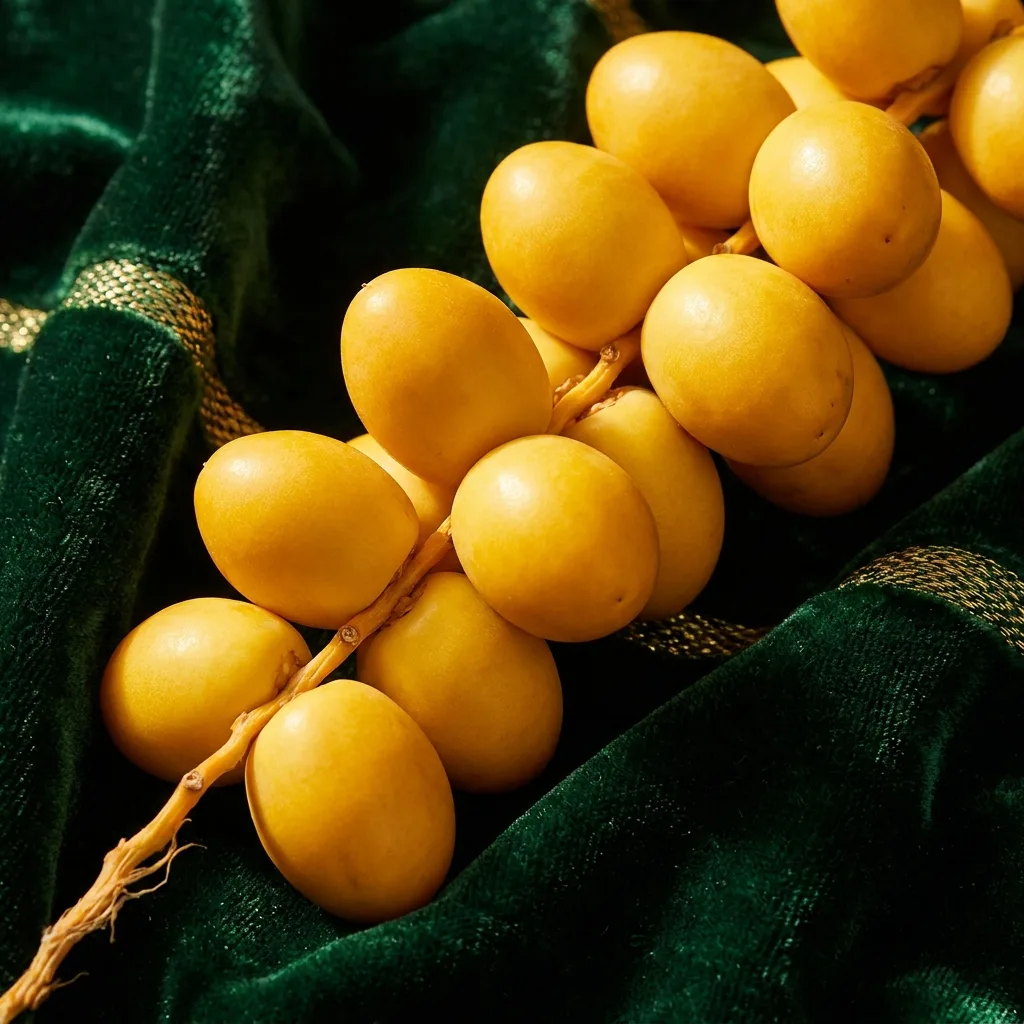
The fruit passes through stages with precise Arabic names: astringent green kimri, then crunchy yellow or red khalal (when Barhi is eaten), then soft honeyed rutab, and finally storable dry tamr. Each stage opens a different market and a different price.
June to September
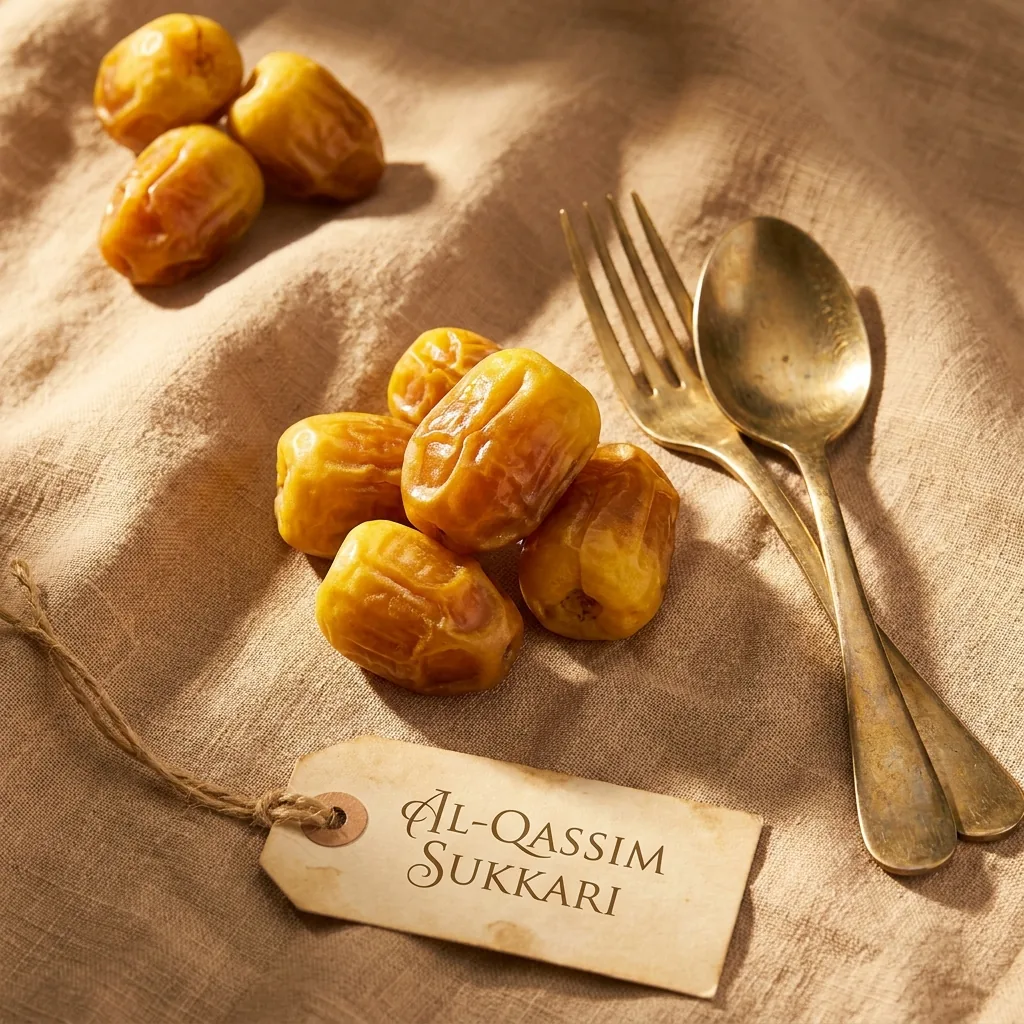
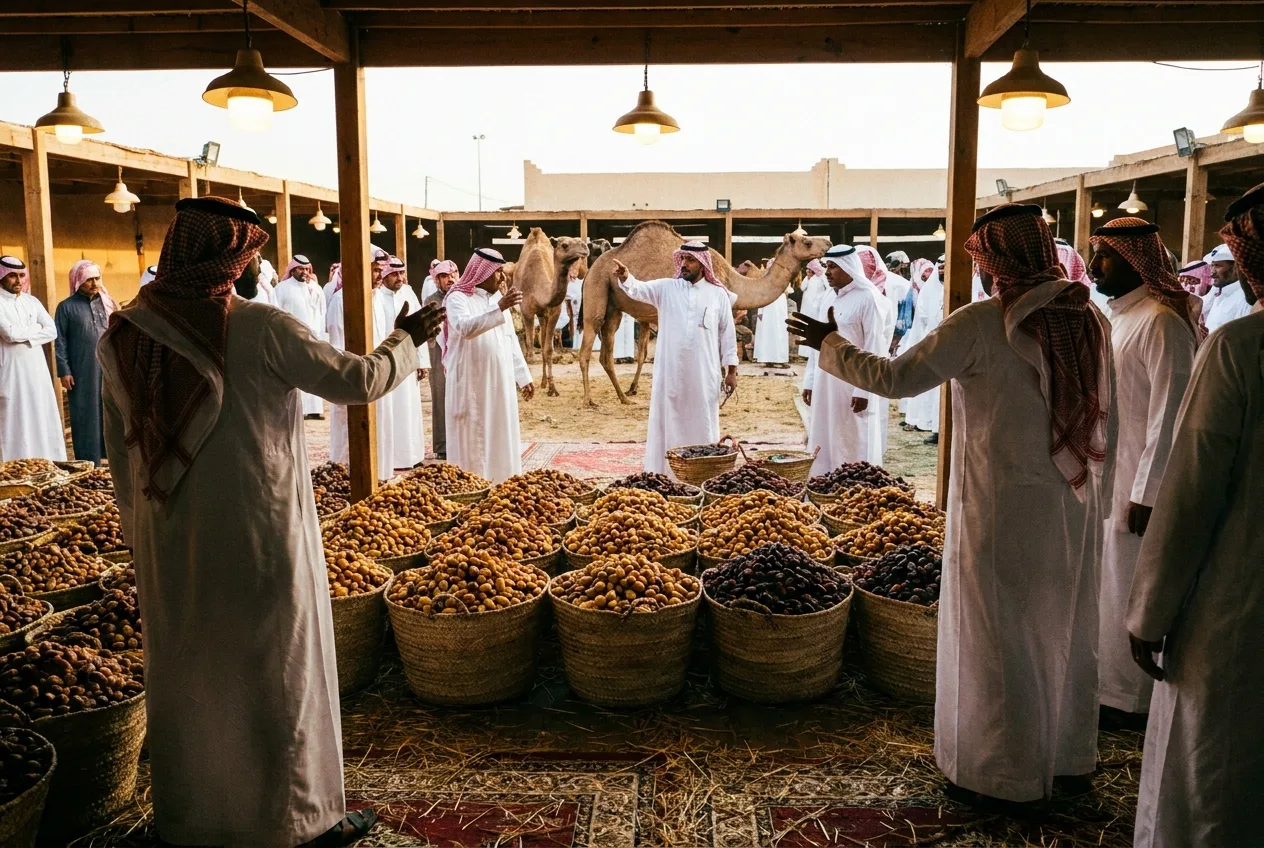
Al-Ahsa and the Eastern Province begin harvesting in June, followed by Al-Qassim in July and August, when the Buraydah festival — the world's largest date market — opens with daily auctions of thousands of loaded trucks. Madinah closes the season in September and October with Ajwa, Safawi and Anbara.
Technology meets tradition
Today dates are graded by optical sorters, packed in chilled plants and tracked with digital provenance certificates, yet the heart of the season is unchanged: families climbing palms at dawn, coffee poured in the market, and an auctioneer's voice rising over the first dates of the year.