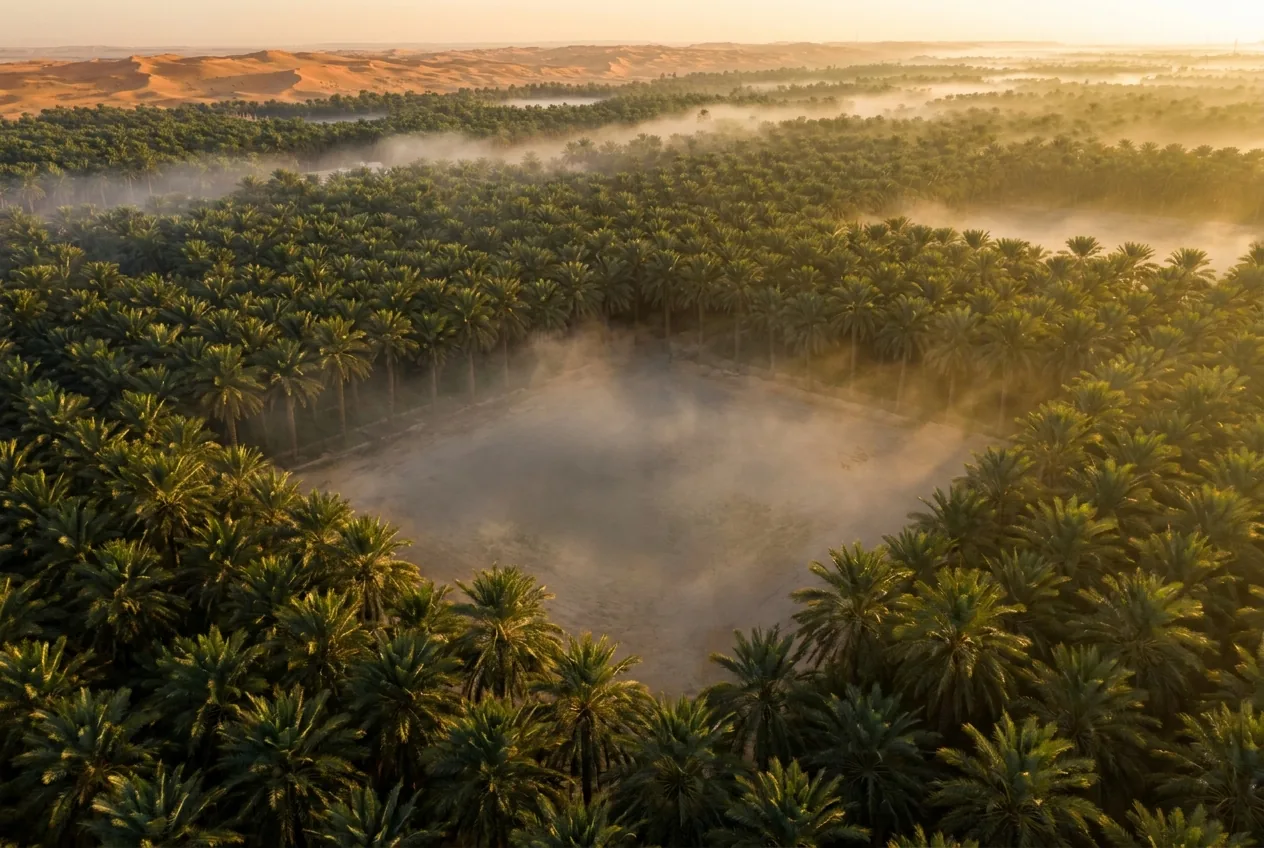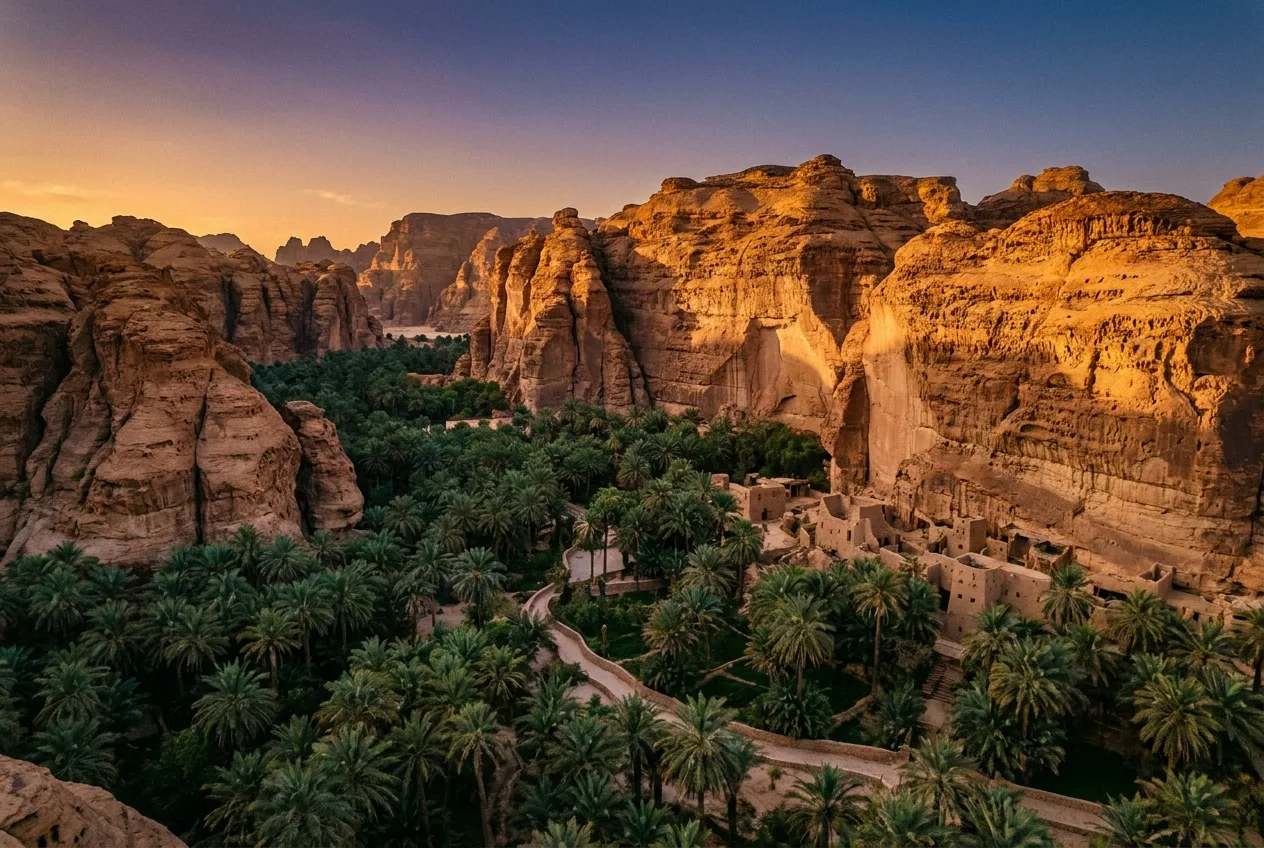
A green wadi in a red desert
Approach AlUla from the south and the desert suddenly parts: walls of red sandstone rise on either side, and between them runs an endless green ribbon of palms. Fed by underground springs and a seasonal wadi, this valley made AlUla an indispensable stop for anyone crossing northern Arabia since the first millennium BCE.
Dadan and Lihyan before the Nabataeans
Before the Nabataeans arrived, the kingdoms of Dadan and Lihyan ruled the oasis and taxed incense caravans from Yemen. The Lihyanites carved lion-guarded tombs into the mountain and left thousands of inscriptions recording merchants and goods — dates among them, carried as provision and gift.
Hegra: the carved city
In the first century BCE the Nabataeans built their great southern city at Hegra (Mada'in Salih), with more than 110 monumental tombs carved with classical façades into the rock. Hegra was the last station before Petra, and its wells and irrigation attest to a thriving agricultural oasis. In 2008 it became Saudi Arabia's first UNESCO World Heritage site.
The oasis today
Some 2.3 million palms are still harvested each summer, farmers gather at the AlUla Dates Festival, the Old Town is being restored and trails open through the groves. AlUla today exemplifies living heritage — conserved, not frozen — history told beneath the palms that have shaded it for millennia.