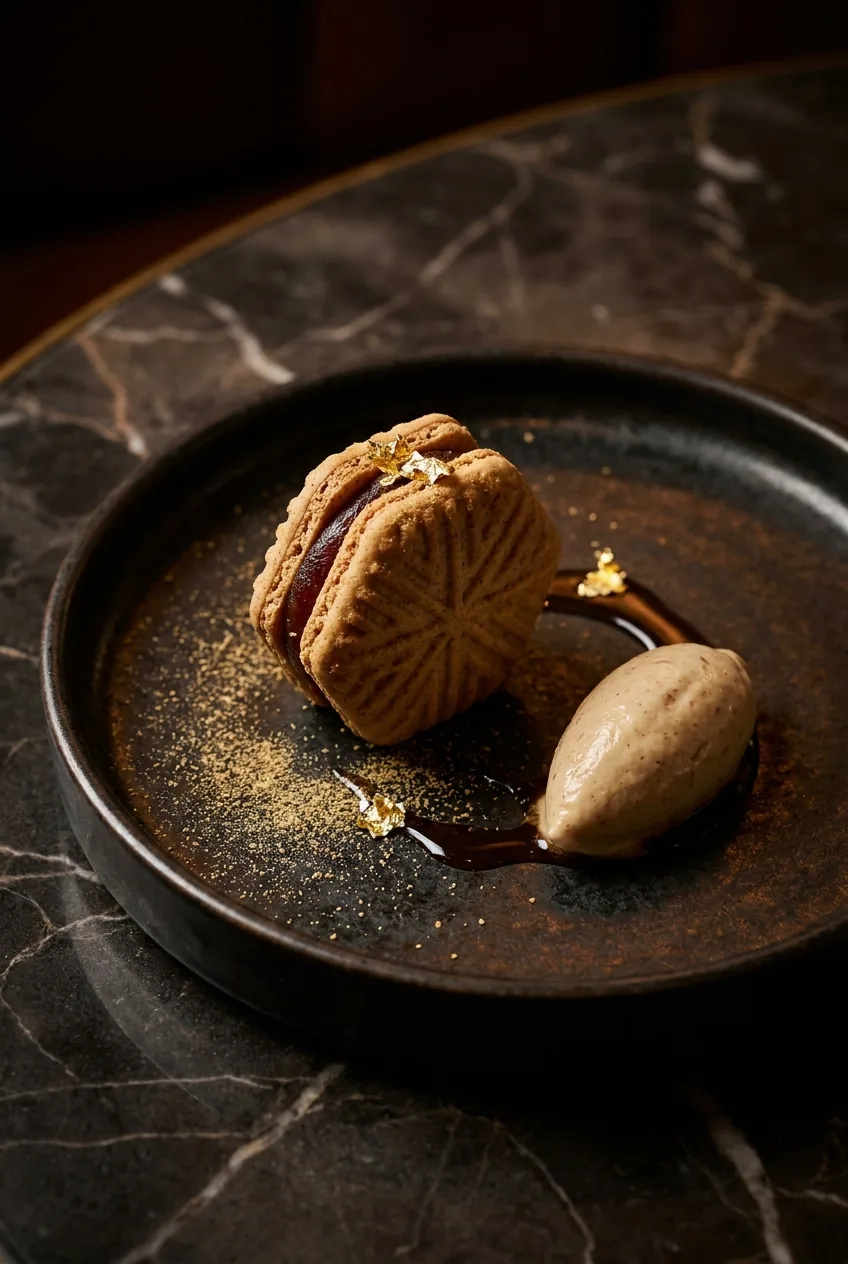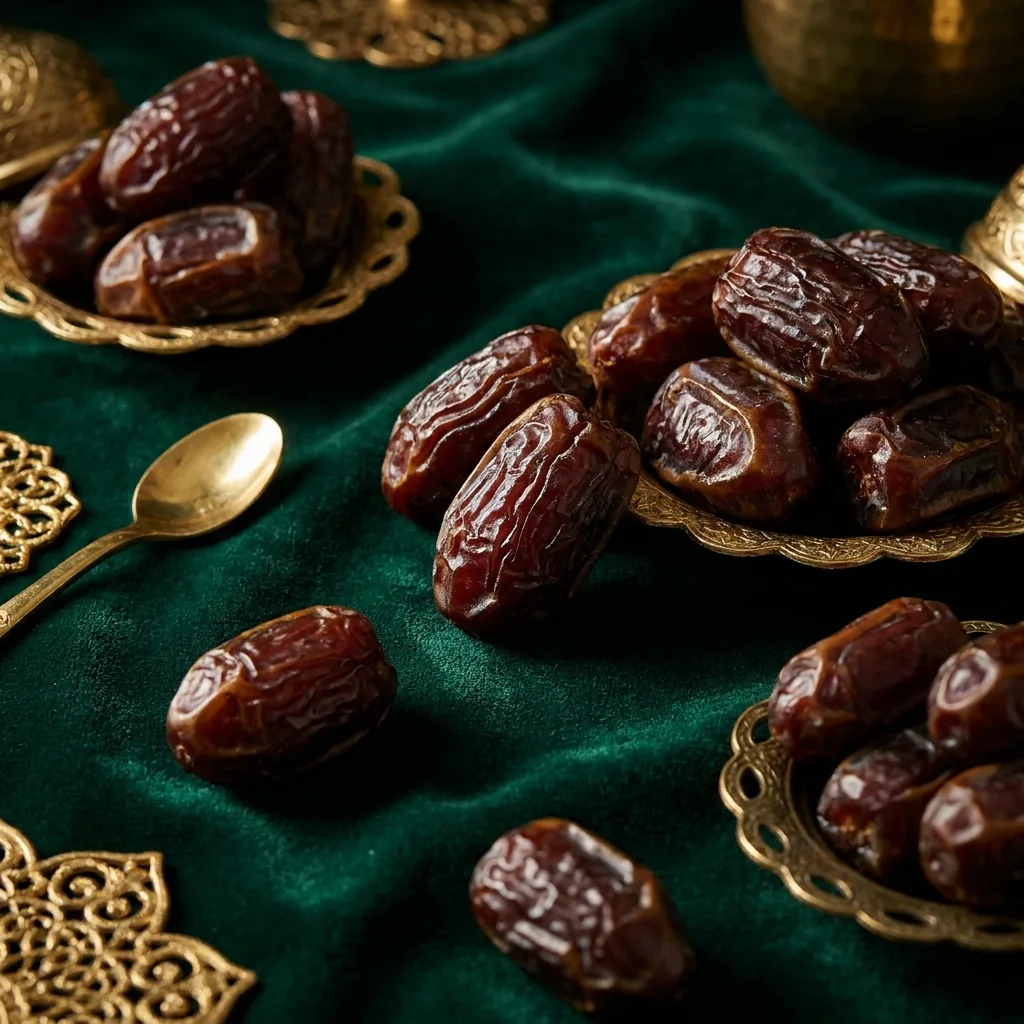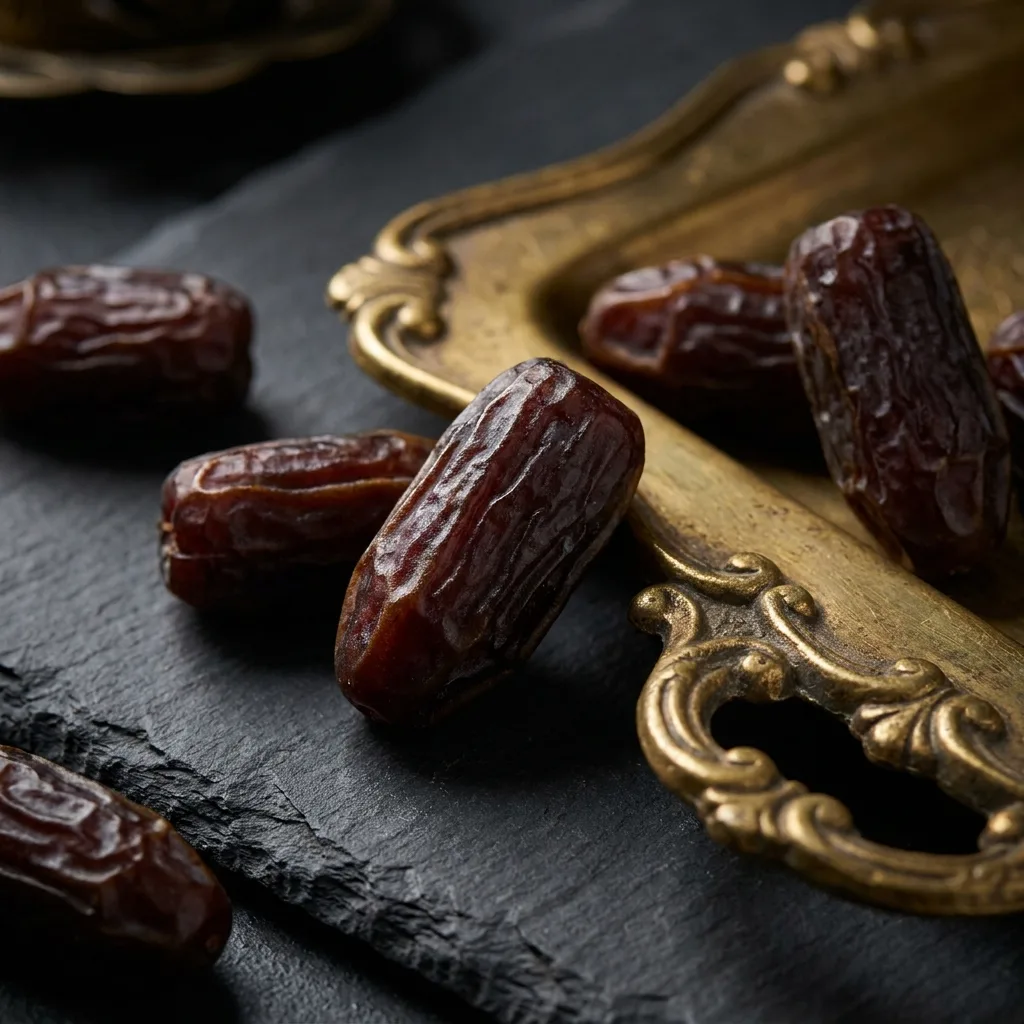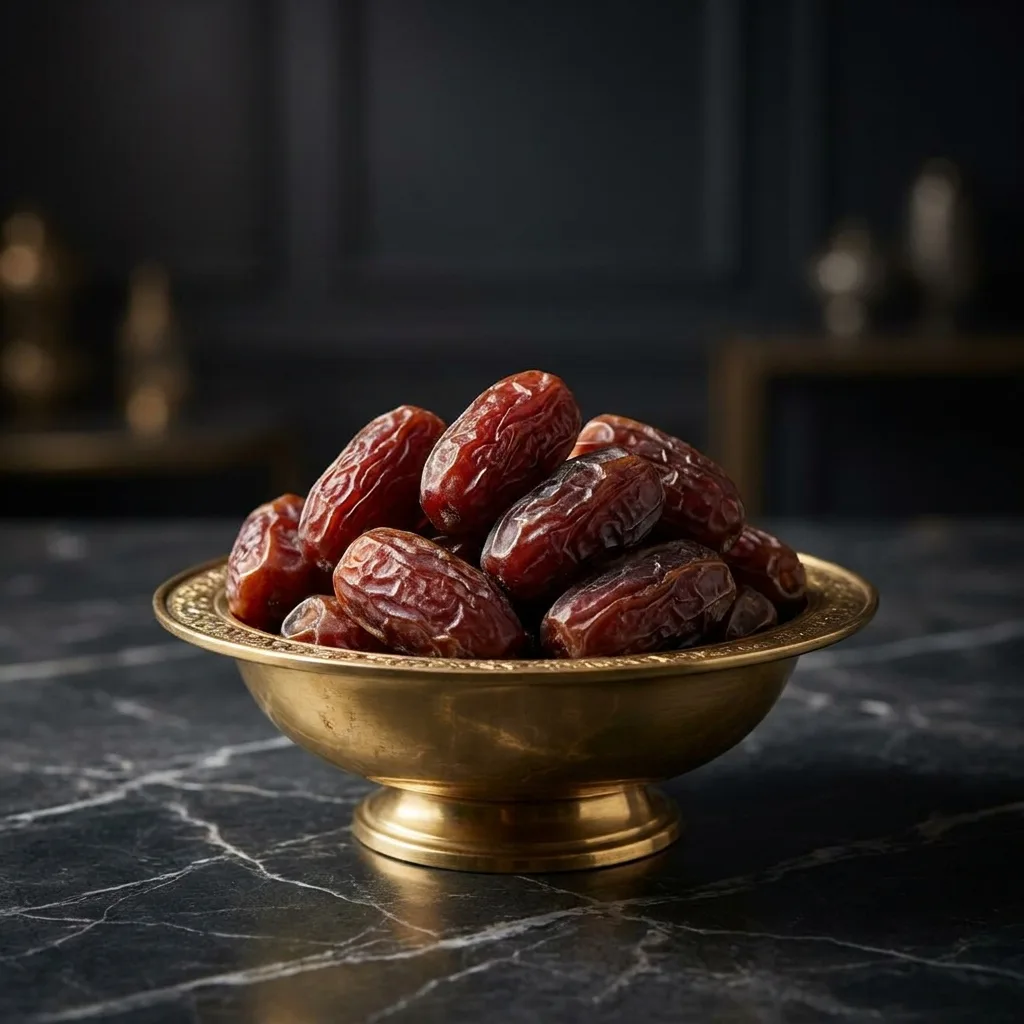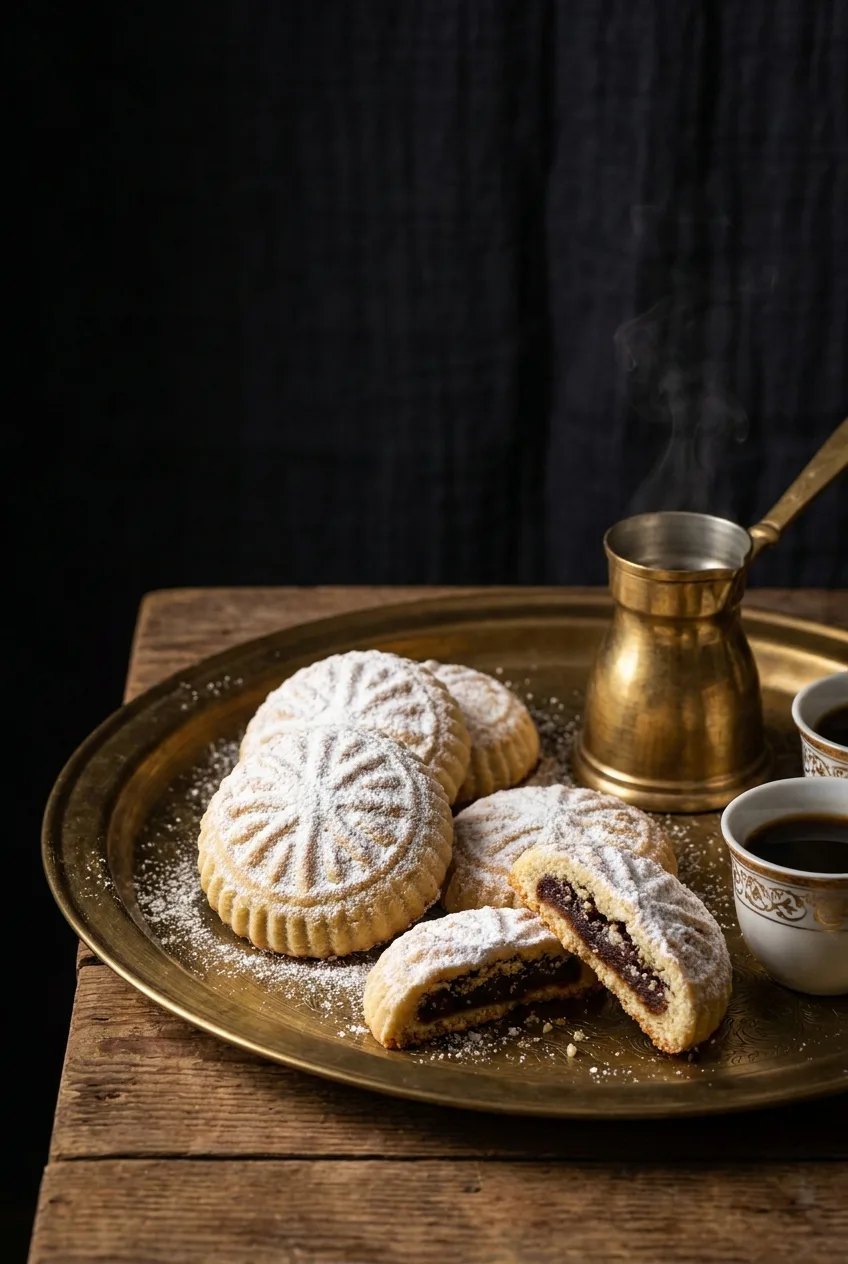
In the last nights of Ramadan, women gather around trays of ma'amoul: fine semolina kneaded with ghee and orange-blossom water, rested, then filled with date paste perfumed with cardamom and clove and pressed into carved wooden molds whose geometric patterns mark each family. Dusted with powdered sugar, it is served with Saudi coffee to Eid-morning guests.
The tradition stretches back centuries across the Hijaz and the Levant, and the whole Kingdom has embraced it — buying new molds in the souqs of Madinah and Jeddah is an annual ritual.